About the Book
The Preface
Richard K. Gibbs: Will I go to Hell for playing the Devil’s interval?
Not being an ardent fan of sitting in pews, I realized I needed help finding an answer. I reached out to my little sister the priest, who also happens to be a religious historian. Those initial conversations quickly took the form of a debate, wherein I was trying to convince her of the many offenses foisted upon musicians by fundamentalist followers of Christianity, Islam, and other beliefs. In turn, she sought to prove to me how wrongheaded I was. The battle was joined via long-distance Zoom and phone calls from my studio in Malibu to her church outside of Atlanta. I escalated our war of words by flying to her home and engaging in long-form written laptop skirmishes, swapping paragraphs whilst lounging on couches across from each other in her living room. That ongoing debate shaped the format of this book.
Some queries I posed to her, amongst many others:
Why does the Taliban murder and maim people for simply performing music?
Was John Coltrane a messenger of God?
Is John Lennon a modern day (anti?) religious martyr?
What did Pope Pius X have against saxophones?
Why do some people believe that music must be either from God or of the Devil?
Mary Grace Gibbs-DuPree: If you go to church regularly (like me), Richard’s questions might seem puzzling or even irrelevant.
You might assume that the relationship between music and religion is simple, untroubled, and joyous. Maybe (like me) you grew up singing in a church choir, and maybe church was the first place you learned about and encountered music. It might seem self-evident that music and religion go hand in hand.
Would it surprise you to learn that has often not been the case?
There have been many times and places where Christianity—and other religions—have tried to control, channel or outright suppress musical expression. That is not ancient history. Many musicians (like my brother) carry the battle scars of a conflict that has been largely invisible to church-goers. I’m a religious historian, so that conflict has not been invisible to me, but it was only in working on this book that the human stakes of the conflict have become clearer to me. Hearing the story of musicians who have felt shut out of the spiritual traditions of their birth has been a moving—and humbling—experience. For some that exclusion has taken the form of subtle social discrimination, or of family disapproval; for others that exclusion has meant violence and bloodshed. These are men and women whose lives have been lived at the fault line of the collision between music and religion, and who have suffered real wounds in that conflict.
As we piece together the story of this relationship between music and religion, I would challenge my fellow church-goers to set aside the things you think you know. Consider a different perspective on a familiar relationship. Join my brother and me on this journey of exploration as we trace a story that is, as it turns out, neither simple nor untroubled—but see if you (like me) find joy at the end of it.
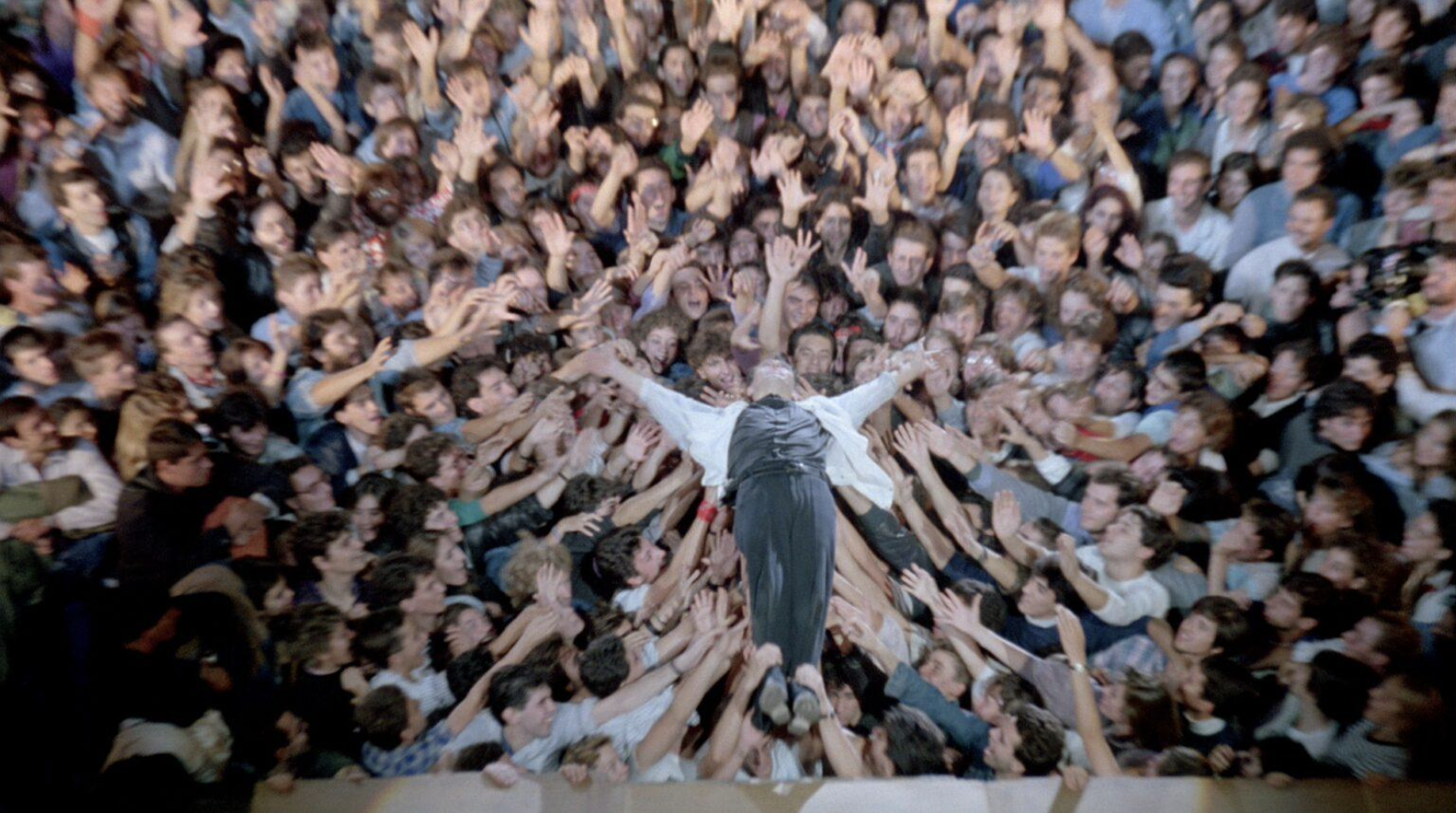
And while we are asking questions: What’s wrong with pogo-ing to Boingo?
Table of Contents
I. Overture
II. Preface
III. Genesis: Boingo
Blue laws vs Oingo Boingo
IV. Footloose vs Fundamentalism
Dean Pitchford on his creation
V. Accompanying God and Big Momma
When music takes a back seat
VI. God Killed the Beatles
Religion vs John, Paul, George & Ringo
VII. Rated X for Sax and Violins
Blacklisted axes and banned tones
VIII. Forbidden Language
Washington Wives worry over words
IX. Certainty
Faith vs facts
X. Don’t Turn Your Back On Me
Miles Davis preaches
XI. Fear of Music
The Taliban vs harmony
XII. Show Me The Money!
The root of all evil
XIII. Cripping the Jam
God’s mysterious ways
XIV. Korn Goes to Church
The truth about the band
XV. Don’t Talk Over Music
Words vs melody
XVI. Sex and Drugs and Rock ‘n’ Roll and Priests and Altar Boys
Perverted shepherds
XVII. Revelation: The Preacher’s Kid
God AND Music in the Congo